Green Martian reproductive and child-rearing system
A Princess of MarsThe Green Martian reproductive and child-rearing system is a community-controlled regime in which chieftains regulate which eggs develop and children are raised by assigned foster mothers rather than their biological parents. It is designed to limit births to the number thought sustainable on a declining planet, yet its efficiency comes at the cost of family identity and affection. The contrast between this impersonal order and Sola’s hidden bond with her parents makes the system both a survival practice and a source of profound human loss.
Selection and Incubation
Green Martian children spend five years developing inside eggs before hatching as fully formed beings, smaller than adults but otherwise ready to enter communal life. Before incubation, the eggs undergo a longer process of selection. Each adult female produces about thirteen eggs a year; eggs meeting standards of size, weight, and specific gravity are placed in cool underground vaults, where they remain unincubated.
A council of twenty chieftains examines the stored eggs annually. From thousands produced in a year, it retains only about one hundred of the most perfect. After five years, roughly five hundred selected eggs are placed in nearly airtight incubators and hatched by the sun’s rays. In the representative hatching described in the narrative, all but about one percent hatched within two days. The fate of the remaining eggs is unknown, but they are unwanted: their prolonged incubation could be inherited and disrupt the community’s ability to predict when eggs should return to the incubators.
The incubators are hidden in remote places unlikely to be found by rival tribes. Their secrecy has direct collective stakes: discovery would leave a community without children for another five years. The system therefore joins reproductive planning to security, treating the incubator not merely as a place of birth but as a protected resource on which the community’s future depends.
Communal Upbringing and Discipline
At hatching, the children are released into a passage formed by rows of women and young Martians. They run through the opening and are caught one by one; the females and young people who capture them take responsibility for their upbringing. The education provided is deliberately narrow: children are taught to speak and to use weapons, which they carry from their first year of life.
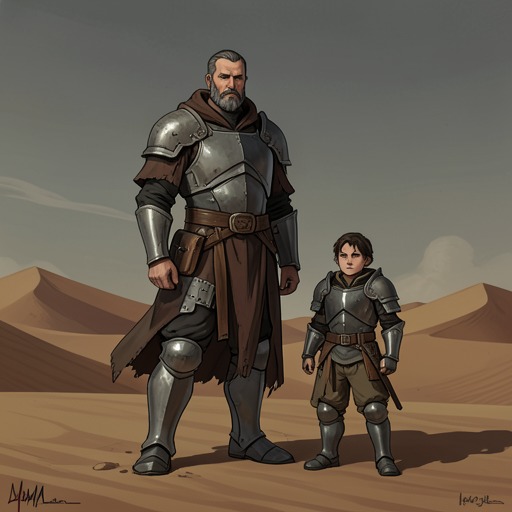
A foster mother need not have produced an egg herself. Sola, for example, had only begun laying eggs less than a year before she became the mother of another woman’s child. Biological maternity does not confer a special claim, and the hatchlings are regarded as the community’s children. Their mothers are unknown to them; their fathers cannot readily be identified even by the women who gave birth to them. Child-rearing thus follows capture and assignment, not recognition of biological kinship.
This arrangement is more than a division of labor. The narrative describes parental and filial love, and the idea of home, as absent from Green Martian life. Children are expected to prove through their physical condition and ferocity that they merit survival; those judged defective are killed. The account emphasizes that adults need not be intentionally cruel for the result to be pitiless: the young grow up without the ordinary protection of familial attachment, under a system that makes their place in the community conditional.
Population Control and Material Pressures
The selection process is explicitly tied to scarcity. Green Martian communities inhabit a world whose natural resources have dwindled, and each additional life is described as a further claim on communal support. Careful selection favors the hardiest individuals, while reproduction is regulated to offset deaths rather than permit unrestricted growth.
The wider account places this policy within a society marked by extensive violent mortality. It estimates that only about one Martian in a thousand dies from sickness or disease, while many others die in duels, hunting, aviation, or war; it also identifies childhood deaths caused by the great white apes as a major source of loss. Against that background, reproductive planning appears as an attempt to keep population and mortality in balance. The chosen scale is exacting: many eggs are produced, only a small fraction are retained, and the surviving candidates must pass through years of storage and incubation before joining the community.
This rationale does not remove the system’s ethical cost. The narrative presents population management as a response to genuine environmental pressure, while also judging the resulting society as emotionally impoverished. Its procedures protect the community’s continuity by controlling which lives are brought forward, but they do not make individual children’s lives secure through parental care. Instead, the system values hardiness and collective need over personal attachment.
Kinship, Exception, and Meaning
The communal principle extends beyond child-rearing. Green Martian property is generally held in common, with personal weapons, ornaments, and sleeping silks and furs treated as individual possessions. Even a man’s retinue of women and children is not a family in the familiar sense: he is responsible for their instruction, discipline, sustenance, and safety during continual travel and conflict, but the women are not wives. Chieftains direct mating as a matter of community policy, without reference to individual choice or natural selection.
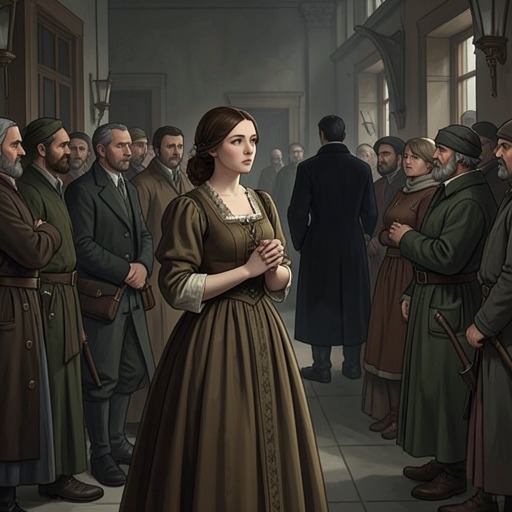
Sola’s history exposes what this system suppresses. Her mother was considered too small for the responsibilities of maternity and was also less cold than other Green Martian women. Away from the city, she formed a secret attachment to a young warrior. After six years together, she secretly carried her child into the city and placed her among the other hatchlings, knowing that she might never see her again. The mother was later imprisoned and died without disclosing the father’s identity. Sola survived as another woman’s foster child, but eventually learned that her father was Tars Tarkas.
This concealed lineage does not overturn the communal system, but it reveals relationships that its official practices cannot fully contain. Sola’s mother’s attachment, her effort to protect her child, and Sola’s later knowledge of her father stand against a society that denies parental love and treats reproduction as a collective concern. The system’s central contradiction is therefore clear: it preserves the community by managing life as a shared resource, yet the exceptional private bonds it suppresses remain consequential, shaping identity, trust, and the possibility of a more compassionate order.